Quick answer
A property-secured business loan uses residential or commercial property as security instead of, or as well as, the vehicles. Amounts range from $20,000 to $5,000,000 through a first mortgage, second mortgage or caveat. It can suit businesses funding several vehicles at once, older or specialised vehicles a vehicle lender won't take, or situations where speed and flexibility matter more than vehicle-by-vehicle structures.
Key points
- Property-secured business loans from $20,000 to $5,000,000.
- First mortgage, second mortgage or caveat over residential or commercial property.
- One facility can fund several vehicles, equipment and working capital together.
- Useful for older, specialised or hard-to-finance vehicles.
- Amounts
- $20,000 to $5,000,000
- Security
- Residential or commercial property
- Forms
- First mortgage, second mortgage, caveat
- Purpose
- Business purposes only
When does it make sense to use property?
Most vehicle finance is one asset, one agreement: the ute secures the ute loan. That’s clean and simple until the business outgrows it. Property-backed finance comes into its own when:
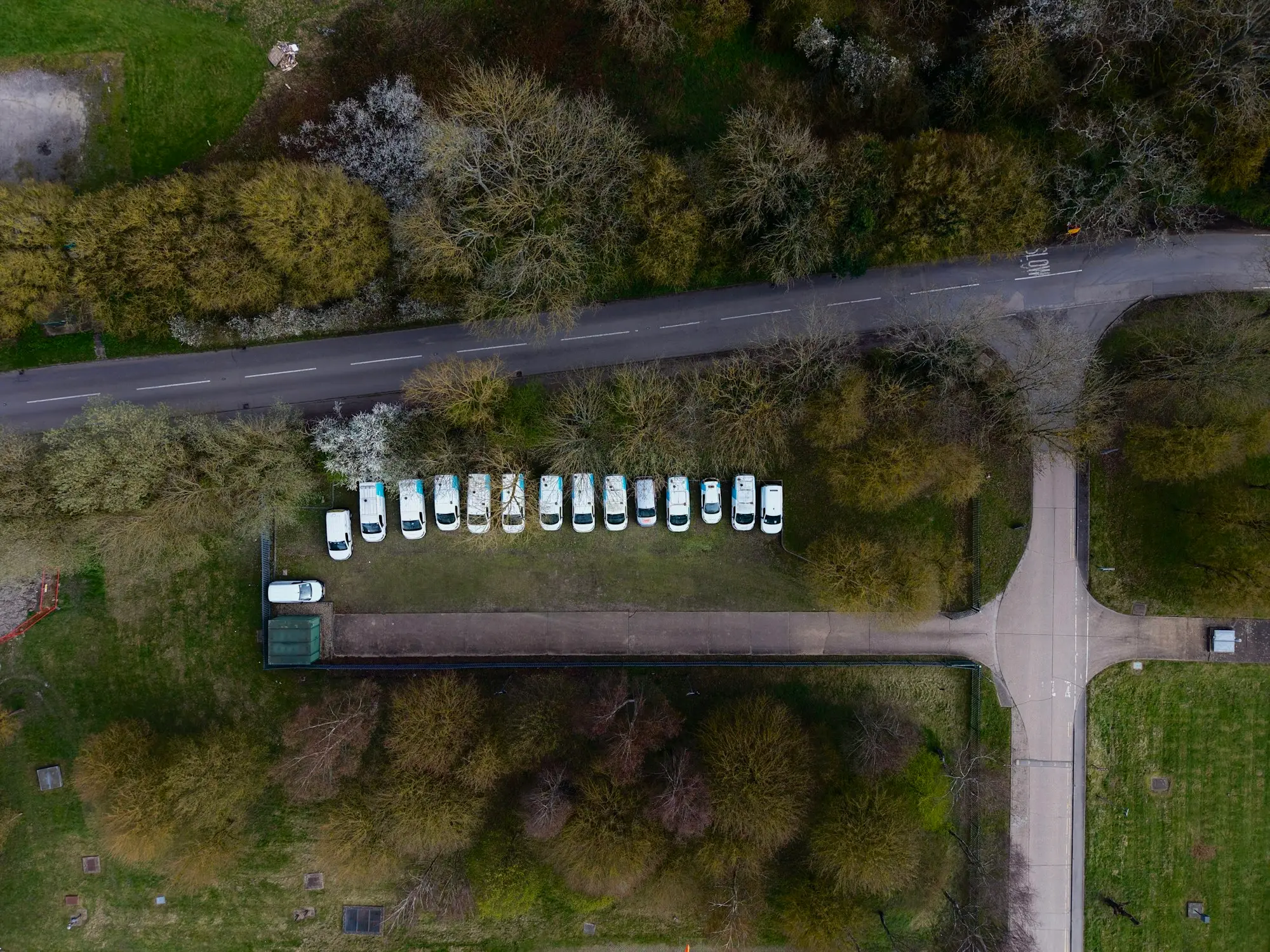
- You need several vehicles at once — winning a contract that needs three vans on day one.
- The vehicles are older or specialised — vehicle lenders may have age caps or struggle with niche bodies.
- You need vehicles plus other things — equipment, a fit-out, working capital — in one facility.
- Your vehicle finance application has stalled because of a newer ABN or past credit issues, but you have equity in property.
- You want one set of repayments instead of five agreements with five end dates.
How does a property-secured business loan work?
The loan is for a business purpose, but the security is property — residential or commercial. There are three common forms:
| Form | How it sits | Typical use |
|---|---|---|
| First mortgage | First claim on the property | Property owned outright or existing loan refinanced |
| Second mortgage | Behind an existing home or commercial loan | Equity available, existing loan stays |
| Caveat | A registered interest on the title | Short-term or quick funding needs |
Amounts range from $20,000 to $5,000,000, depending on the property’s value and existing debt, and the business’s ability to repay. Past credit problems and ATO debt are considered case by case.
How does this compare with vehicle finance?
| Vehicle finance | Property-backed loan | |
|---|---|---|
| Security | The vehicle | Property |
| Number of vehicles | One per agreement (usually) | Many in one loan |
| Vehicle age limits | Common | Generally not an issue |
| Use of funds | That vehicle | Vehicles, equipment, working capital |
| GST on purchases | Claimed as usual | Claimed as usual — the purchase still has GST |
| Risk to property | None | Property is at stake if you can’t repay |
That last row deserves weight. Putting property on the line is a bigger commitment than putting up a ute. It’s the right tool in the right situation, not a default.
What about GST and tax?
The way you fund a vehicle doesn’t change whether GST was in the price. If you buy from a registered dealer and you’re registered for GST, you can still generally claim the credit for business use, capped at one-eleventh of the car limit for passenger cars. The car limit and other vehicle tax rules apply the same way. Interest on a business-purpose loan is generally deductible, but your accountant should confirm how it applies to you.
Who uses property-backed fleet finance?
- Transport operators adding a prime mover and trailers together — see heavy truck finance.
- Builders buying a tipper, two utes and a plant trailer for a new project.
- Couriers and last-mile operators scaling from two vans to eight.
- Farmers combining a farm ute, a truck and machinery before harvest.
- Businesses refinancing several scattered vehicle loans into one.
Illustrative example: a transport company’s growth step
Illustrative only. A family transport company wins a regional contract needing a second prime mover and two trailers within weeks. The vehicle lender is willing to finance the prime mover but not the older trailers they’ve found. The directors own their home with plenty of equity, so a second-mortgage business loan funds the prime mover, the trailers and a working-capital buffer in one settlement. They plan to refinance the trucks onto vehicle finance once the contract has a year of history.
What does a lender need for a property-backed loan?
Because the security is property, the paperwork looks a little different from straightforward vehicle finance:
- Property details — address, current value estimate, and the lender and balance of any existing mortgage.
- A valuation, usually ordered by the lender.
- Identification for all owners of the property and directors of the borrowing business.
- Evidence of the business purpose — vehicle quotes, contracts, equipment invoices.
- Evidence of ability to repay — bank statements, BAS or financials, depending on the amount and lender.
- An exit or repayment plan for shorter-term facilities such as caveat loans.
Short-term or long-term?
Property-secured business funding can be set up for different horizons. Short-term facilities are often used to bridge a gap — for example, buying vehicles now and refinancing them onto vehicle finance once a new contract has some history. Longer-term facilities can fund a fleet over several years. The right one depends on what the money is for and how you’ll repay it.
Questions to think through first
- Is there enough equity in the property after any existing loan?
- Are all property owners comfortable with it being used as security?
- Would vehicle finance alone do the job, even if it means two or three separate agreements?
- What’s the plan to repay — cash flow, refinance or sale of assets?
- Has your accountant looked at how the interest and vehicle purchases will be treated?
Is property-backed finance right for your fleet?
If your business is growing faster than vehicle-by-vehicle finance can keep up, compare the options on our fleet finance page, then ask us what’s possible — the enquiry takes about a minute.
There’s no credit check when you first get in touch. We don’t spread your details around the market; one specialist builds the right package and calls you to talk it through. Please tell us accurately about the property, any existing loans and the vehicles you need, so the first option we bring you is a realistic one. Start your enquiry.
Frequently asked questions
Why use property when the vehicles can be the security?
Vehicle finance works well one vehicle at a time. When you need several vehicles together, older or specialised ones, or vehicles plus equipment and working capital, a single property-secured loan can be simpler and more flexible.
Do I need to own the property outright?
No. A second mortgage or caveat can sit behind an existing home loan if there's enough equity. A first mortgage is used where the property is unencumbered or the existing loan is being refinanced.
Can I use my home?
Residential property, including your home, can be used as security for a business-purpose loan. It's a serious decision, so think carefully and get advice if you're unsure.
Is a property-backed loan faster?
It can be, because one approval and one settlement covers the whole package rather than a separate deal for each vehicle. We work to get it done as fast as possible once valuations and documents are in.