Quick answer
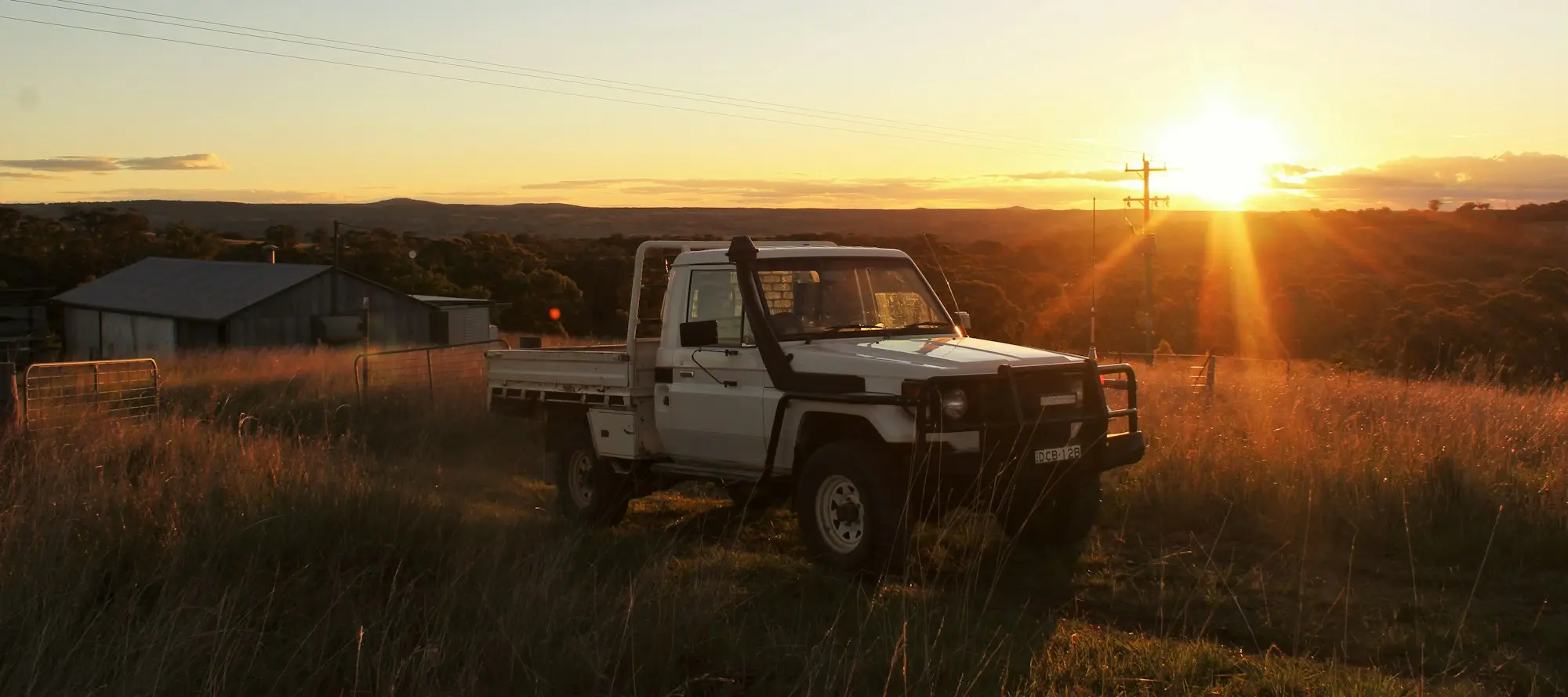
4WD finance for business covers four-wheel-drive wagons and utes used for remote, rural, mining, surveying, tourism and field work. They're usually financed through a chattel mortgage. A 4WD wagon is generally a passenger vehicle, so the car limit applies, while a 4WD ute designed mainly to carry goods may not. Lenders want to know about genuine business use, accessories and the kilometres it'll cover.
Key points
- 4WD wagons are usually passenger vehicles; 4WD utes may not be — check the model.
- Accessories like bull bars, winches and drawers can often be financed with the vehicle.
- High kilometres and rough conditions affect resale, so be careful with balloons.
- Show the business need — remote sites, rural clients, field work.
- Usual structure
- Chattel mortgage
- Wagons
- Car limit usually applies
- Utes
- May sit outside the car limit
- Suits
- Rural, remote and field businesses
Who needs a 4WD for work?
Plenty of Australian businesses operate where a two-wheel-drive simply won’t go:
- surveyors, geologists and environmental consultants working in the field;
- mining services and contractors travelling to remote sites;
- rural vets, agronomists and stock agents visiting properties;
- tour operators running outback and beach trips;
- telecommunications and power contractors maintaining remote infrastructure;
- farmers and station managers covering large properties.
For these businesses a 4WD isn’t a lifestyle choice; it’s the tool that gets them to the work.
Wagon or ute: why it matters for tax
The type of 4WD changes how the ATO treats it:
| 4WD wagon | 4WD ute designed mainly to carry goods | |
|---|---|---|
| Car limit | Usually applies | May not apply |
| GST credit cap | One-eleventh of car limit ($6,353 for 2026–27) | May not be capped |
| FBT on limited private use | Car fringe benefit rules apply | Exemption for limited private use may apply |
| Luxury car tax | Possible on dearer models | Generally depends on vehicle classification |
The ATO says the car limit applies to passenger vehicles designed to carry a load of less than one tonne and fewer than nine passengers. Most 4WD wagons fit that description; some 4WD utes don’t. Check the specific model with your accountant. See car limit and luxury car tax.
Financing accessories
A remote-work 4WD often needs serious kit: bull bar, winch, recovery gear, dual battery system, lights, long-range fuel tank, drawers, a fridge, communications. Accessories supplied and invoiced with the vehicle can usually be financed as part of it. Items fitted later on a separate invoice may need separate funding.
Keep in mind that accessories rarely add as much resale value as they cost, which matters if you’re thinking about a balloon.
What lenders look at
- Business need — why a 4WD? Remote sites, rural clients or field work make the case.
- Kilometres and conditions — heavy remote use affects value.
- Price relative to the business — a top-spec wagon for a small business needs justification.
- Your trading history — bank statements, BAS or financials.
- Seller — dealer, private or auction.
Business use and the logbook
Many 4WDs used for work are also used privately. Every tax benefit — GST credits, depreciation, running costs — generally depends on business use. For sole traders and some partnerships claiming car expenses, the ATO’s logbook method requires a logbook kept for at least 12 continuous weeks, valid for five years. Our business-use percentage helper turns logbook kilometres into a percentage.
Companies and trusts must use actual costs, and private use by directors or employees may involve FBT.
Balloons on a hard-working 4WD
A 4WD that does long kilometres on corrugated roads loses value faster than one that lives in town. If you choose a balloon, keep it conservative and plan to trade before the kilometres climb too high. If you’ll keep the vehicle for many years, a structure with no balloon usually makes more sense. See balloon payments.
Illustrative example: an environmental consultant
Illustrative only. An environmental consulting company sends staff to remote field sites several weeks a year. It finances a 4WD wagon through a chattel mortgage, including a dealer-fitted bull bar, winch and dual battery system on the same invoice. Because the wagon is a passenger vehicle, the company’s GST credit is capped by the car limit. Staff keep trip records, and the accountant reviews the FBT position because the wagon is sometimes taken home between field trips.
4WD or something else?
If the work is mainly carrying gear rather than people, a 4WD ute may be more practical and could be treated differently for tax. Farming businesses can also see farm vehicle finance. For city-based work, a regular business car might be all you need.
Questions to settle before you buy a work 4WD
Remote-work vehicles are expensive to get wrong. Before you commit, work through these with your team and your accountant:
- How many people and how much gear? A wagon carries people in comfort; a dual-cab ute with a canopy carries gear securely. Many field teams need both.
- What’s the realistic annual distance? Remote work can mean very high kilometres, which affects servicing costs, resale and whether a balloon is sensible.
- What fuel range do you need? Long-range tanks add cost and weight but may be essential for some routes.
- Who will drive it, and when? If staff take it home or use it on weekends, the FBT position changes.
- What recovery and safety gear is mandatory for your sites or clients? Mining and infrastructure clients often specify equipment.
- How will you service it? Check dealer and independent service coverage in the regions you work.
Where the money really goes
For a remote-work 4WD, running costs can rival the finance repayments: tyres on rough roads, more frequent servicing, fuel, insurance and registration. Build a realistic yearly budget and make sure the repayments still sit comfortably alongside it. Lenders look at affordability as a whole, and so should you.
Buying privately in regional areas
Many good 4WDs change hands privately in country towns. That’s fine for finance — a chattel mortgage works for private sales — but remember there’s usually no GST to claim, the lender will want a clear PPSR search, and an independent inspection is worth every cent on a vehicle that’s been off-road.
Ready to get off the bitumen?
Tell us about the 4WD and the work it’ll do — it takes about a minute.
There’s no credit check when you first enquire, and your enquiry stays with one specialist rather than being passed around. That person calls you to understand the vehicle, the accessories and the business use. Please be accurate about price, kilometres and how the vehicle will be used — it helps us choose the right lender first time. Start your enquiry.
Frequently asked questions
Can I finance a 4WD through my business if I also use it for holidays?
Yes, if it's genuinely used for business. You'd generally only claim GST credits and deductions for the business-use share, and private use by employees or directors of a company may create FBT. Keep a logbook.
Are accessories included in the finance?
Accessories supplied and invoiced with the vehicle — bull bars, winches, lights, drawers, canopies — are usually included. Items fitted later by another supplier may need separate funding.
Does the car limit apply to a 4WD wagon?
Generally yes, because 4WD wagons are usually designed to carry fewer than nine passengers and less than one tonne. The car limit for 2026–27 is $69,883.
Should I take a balloon on a 4WD?
Be cautious if it'll do high kilometres on rough roads, because that can reduce what it's worth when the balloon falls due. A balloon can work if you'll trade it in on a regular cycle with reasonable kilometres.