Quick answer
Trailers can be financed on their own or together with the vehicle that tows them. Small trailers are often bought from cash flow or bundled into a ute purchase, while plant trailers, refrigerated units and semi-trailers are usually financed through a chattel mortgage with the trailer as security. Lenders look at the trailer's type, builder, age and how it earns income for the business.
Key points
- Trailers can be financed alone, with the towing vehicle, or inside a larger facility.
- Well-known builders and standard designs are easier to finance.
- Match the trailer's loaded weight to the towing vehicle's rating.
- Semi-trailers and specialised units often pair with prime mover finance.
- Usual structure
- Chattel mortgage
- Can bundle with
- The towing vehicle
- Key factors
- Builder, type, age
- Car limit
- Doesn't apply
Which trailers do businesses finance?
Trailers come in every shape, and most of them are working hard for a business somewhere:
- box and tandem trailers for landscapers, gardeners and tradies;
- plant trailers carrying excavators, skid steers and rollers;
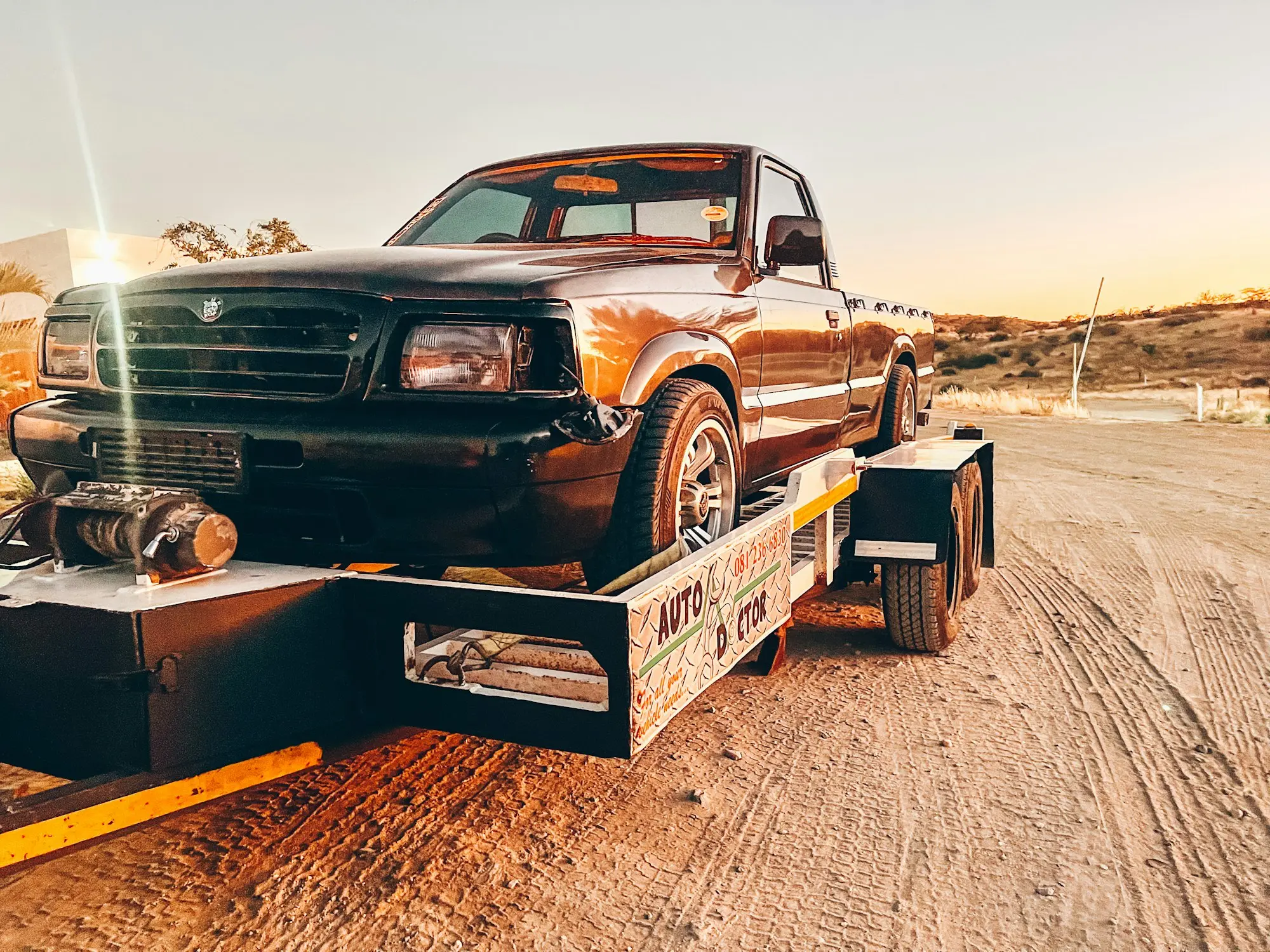
- car carriers for mechanics, detailers and dealers;
- enclosed and cargo trailers for events, mobile services and equipment;
- food and coffee trailers for markets and festivals;
- refrigerated trailers for catering and produce;
- semi-trailers, dogs and dollies for heavy transport.
A small box trailer might cost less than a few weeks’ revenue, so many businesses simply pay cash. Heavier and specialised trailers are where finance usually comes in.
How are trailers financed?
| Approach | When it suits |
|---|---|
| Bundled with the towing vehicle | Ute and trailer bought together from one seller |
| Chattel mortgage on the trailer alone | Plant, refrigerated and specialised trailers |
| With a prime mover | Semi-trailers bought alongside a truck — see heavy truck finance |
| Property-backed facility | Several trailers, older units or a package with machinery |
| Instant asset write-off | Lower-cost trailers below the ATO threshold (eligibility applies) |
Could the instant asset write-off apply?
The ATO’s instant asset write-off lets eligible small businesses — aggregated turnover under $10 million — immediately deduct the business portion of an asset that costs less than $20,000, where the asset is first used or installed ready for use on or after 1 July 2023. That threshold applies per asset, so some smaller trailers fall within it, while most plant and heavy trailers won’t. Financing an asset doesn’t stop you claiming the write-off if you’re eligible. Check with your accountant, and see our instant asset write-off page.
What do lenders consider?
| Factor | Why it matters |
|---|---|
| Builder | Recognised manufacturers hold value and are easier to resell |
| Type | Standard designs are easier to finance than one-offs |
| Age and condition | Older trailers may get shorter terms |
| Compliance plate and registration | Confirms the trailer is legal and identifiable |
| Purpose | How the trailer earns income |
Home-built or heavily modified trailers can be harder. If yours is unusual, mention it upfront.
Match the trailer to the tow vehicle
Before buying, check the towing vehicle’s braked towing capacity and tow-ball rating, and make sure the loaded trailer is within them. Heavier trailers may need electric brakes, and some combinations require a different driver licence. Getting this wrong can void insurance and create safety problems, and a lender won’t want to finance a rig that can’t legally operate. If you need a bigger ute to tow the trailer you want, see ute finance.
Registration for trailers
Light trailers are registered with your state or territory transport authority. Heavy trailers fall under national heavy vehicle registration arrangements administered through the NHVR in participating jurisdictions. Registration costs vary, so check before you budget.
Illustrative example: a plant hire start-up
Illustrative only. An operator who owns a mini excavator wants to offer dry hire with delivery. She needs a plant trailer rated for the excavator and a ute that can legally tow it. She finances both through one chattel mortgage from the same dealer, keeping the combination on aligned terms. The trailer’s compliance plate and the ute’s towing rating are checked before settlement.
Trailers for food and mobile businesses
Food and coffee trailers are popular with market operators because they can be cheaper than a full food truck and can be towed by a vehicle the business already owns. They often include kitchen equipment, so lenders want an itemised invoice. See food truck finance for more. Farmers financing livestock trailers can see farm vehicle finance.
Trailer checklist before you buy
- Confirm the compliance plate matches the trailer and its rated mass.
- Check the braking system suits the loaded weight.
- Inspect tyres, bearings, lights and coupling.
- Run a PPSR search on the trailer’s VIN if it’s second-hand.
- Confirm registration is current and transferable.
- Check insurance cover for the trailer and its load.
Car carriers and enclosed trailers
Mechanics, detailers, dealers and vehicle recovery businesses often need a car carrier or tilt trailer. These are usually financed through a chattel mortgage like any other trailer, and lenders look at the builder, the rated mass and how the trailer earns income. Enclosed trailers used for events, mobile businesses or equipment storage are similar.
Refrigerated trailers
Refrigerated trailers combine a trailer with a refrigeration unit, so lenders want details of both. Ask the seller for the unit’s age and service records, and check that it suits the products you carry. If the trailer is part of a food or catering business, see our food truck finance page for related considerations.
Insurance and security for trailers
Trailers are easy targets for theft. A wheel clamp, coupling lock and good storage protect the asset, and many lenders require insurance on financed trailers. Record the VIN and take photos so you can identify the trailer if it’s ever stolen.
Need a trailer — or a whole rig?
Whether it’s a single plant trailer or a full combination, tell us what you need and we’ll explain how it’s best financed. The enquiry takes about 60 seconds.
Enquiring won’t mean a credit check. Your details stay with one specialist rather than being spread around lenders, and that specialist calls you to understand the trailer, what’s towing it and what it earns. Please give accurate details about the builder, age and price of the trailer — that’s what decides which lender fits. Send your enquiry.
Frequently asked questions
Can I finance a trailer on its own?
Yes. Many lenders finance trailers individually through a chattel mortgage, particularly plant trailers, refrigerated trailers and semi-trailers. Small box trailers are often cheaper to buy from cash flow.
Can I add a trailer to my ute finance?
If you buy the trailer at the same time and from the same seller as the ute, it can often be included. Adding one later usually means a separate agreement.
Are second-hand trailers financeable?
Yes, though lenders look at age, condition and builder. Older trailers may suit a shorter term or a property-backed loan.
Do I need a special licence to tow?
It depends on the combined mass and your state's rules. Heavy trailers may need a different licence class and specific braking. Check with your state licensing authority.