Quick answer
Farm vehicle finance helps primary producers buy utes, trucks, trailers and 4WDs used on the property and on the road. It's usually a chattel mortgage, and some lenders offer seasonal or irregular repayment schedules that match harvest or sale income. Lenders look at the farm's income pattern, the vehicle's age and condition, and sometimes the property itself for larger packages.
Key points
- Seasonal or irregular repayment schedules may be available to match farm income.
- Older, hard-working vehicles may suit shorter terms or property-backed funding.
- Farm utes designed mainly to carry goods may sit outside the car limit.
- Plan purchases around harvest and sale income, not just EOFY.
- Common vehicles
- Utes, trucks, trailers, 4WDs
- Usual structure
- Chattel mortgage
- Repayments
- Seasonal options may be available
- Bigger packages
- Property-secured, $20k–$5m
Farm vehicles work harder than most
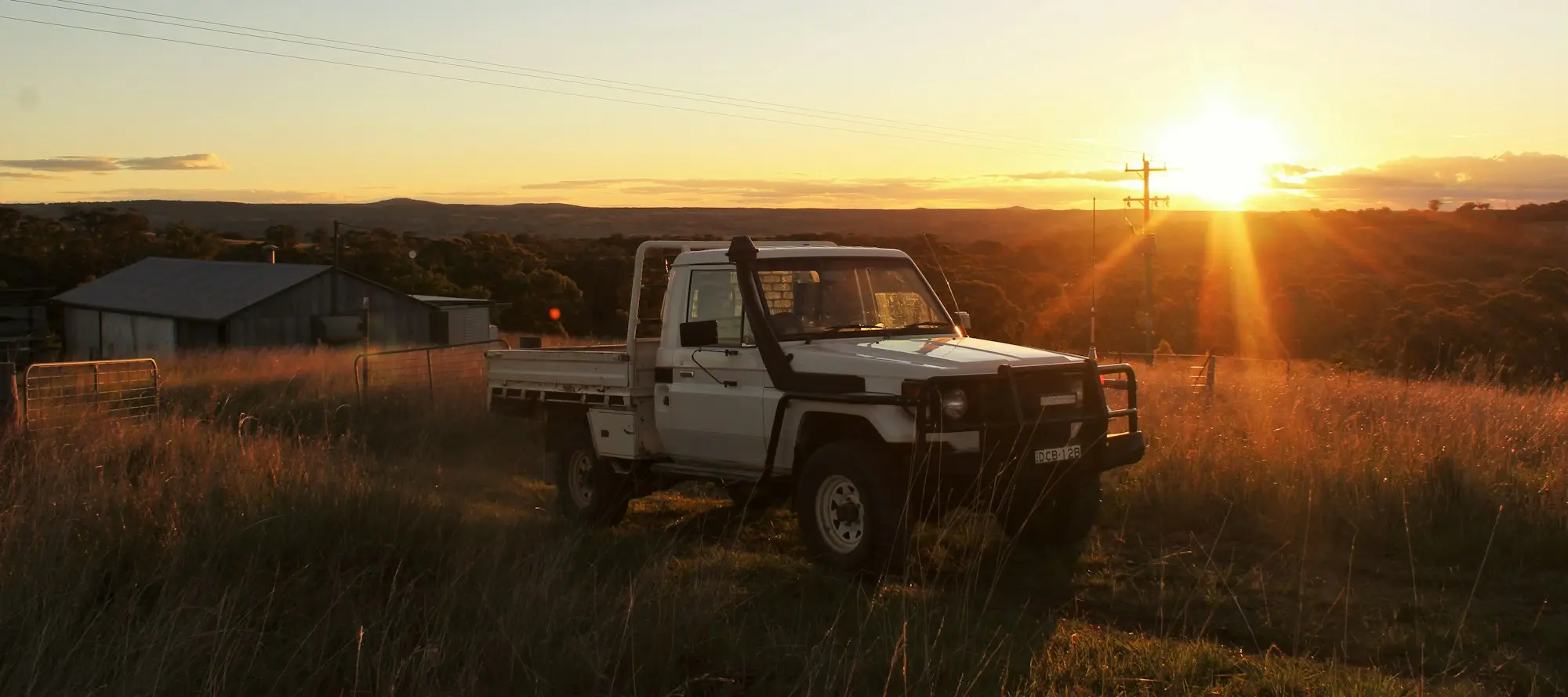
A farm ute might spend the morning in a muddy paddock, the afternoon towing a stock trailer and the evening on a highway to town. Farm trucks cart grain, hay and livestock. Trailers move machinery between properties. These vehicles work in conditions that would wear out a city car in months.
That shapes the finance: lenders think carefully about vehicle age and condition, and farmers need repayments that fit income arriving in lumps rather than every week.
What farmers finance
| Vehicle | Typical use |
|---|---|
| Single-cab tray ute | Fencing, feeding, general farm work |
| Dual-cab 4WD ute | Workers and gear, rough terrain |
| Farm truck (rigid) | Grain, hay, water, fertiliser |
| Prime mover and trailers | Livestock and bulk freight to market |
| Livestock and plant trailers | Moving stock and machinery |
| 4WD wagon | Agronomists, consultants, managers covering big distances |
See ute finance, 4WD finance, trailer finance and heavy truck finance.
Repayments that match farm income
Farm income rarely arrives monthly. A grain grower may be paid after harvest; a cattle producer after sale; a horticulturist across a picking season. Some lenders offer:
- seasonal repayments, with larger payments when income arrives;
- quarterly or half-yearly repayments;
- repayment holidays in known quiet periods, built into the schedule.
Not every lender does this, and terms vary. When you enquire, tell us exactly how and when your income comes in, so we can match you with lenders that understand agriculture.
Older vehicles and property-backed options
Farms often run older vehicles — a reliable 20-year-old truck may still have years left. Vehicle lenders may cap the age at the end of the term, which can make old trucks hard to finance. Options include:
- a shorter term with a deposit;
- refinancing equity from other farm vehicles;
- a property-backed loan from $20,000 to $5,000,000, where rural or residential property is the security.
Property-backed funding can also cover a package — a truck, trailers and machinery together — before a busy season.
Tax basics for primary producers
The usual vehicle rules apply. GST-registered farms buying from a dealer can usually claim the GST in the price for business use. Farm utes designed to carry a tonne or more generally sit outside the car limit, while 4WD wagons are usually caught by it. Lower-cost assets may qualify for the instant asset write-off if the business is eligible. Primary producers can also have specific tax concessions, so talk to an accountant who knows agriculture.
Registration for farm vehicles
Some states offer concessional registration for primary producers’ vehicles used mainly on the farm, and heavy vehicles fall under national heavy vehicle arrangements administered through the NHVR in participating jurisdictions. Check with your state transport authority for current rules — see stamp duty and registration.
Timing purchases around the season
EOFY gets a lot of attention, but for farmers the season matters just as much. Buying a truck the week before harvest only works if finance is already approved. Start the conversation a couple of months ahead, especially for trucks and trailers that may need inspections or valuations.
Illustrative example: a grain grower’s truck before harvest
Illustrative only. A grain-growing family needs a second truck before harvest. They find a used rigid truck with a grain body through a dealer. A lender familiar with agriculture approves a chattel mortgage with repayments weighted to the months after harvest, when grain payments arrive. The truck is on the property three weeks before the header goes in.
Getting the paperwork right for a farm application
Farm finance applications often stall on paperwork rather than on the farm’s strength. Have these ready:
- recent business bank statements showing seasonal income patterns;
- the last two years of financial statements and tax returns for larger amounts;
- details of any existing equipment and vehicle finance;
- the vehicle’s invoice or seller details, and for older trucks, photos and service records;
- for property-backed loans, property details and existing mortgage information.
If income was hit by drought, flood or fire, say so and explain how the business has recovered. Lenders who understand agriculture expect bad seasons; what they want to see is how the business manages them.
Vehicles that pull double duty
Many farm vehicles are used for both farm work and family transport, especially dual-cab utes. That’s normal, but it affects tax: GST credits and deductions generally only apply to the business-use share. If a farming company provides a ute to family members who work on the farm, think about FBT too — limited private use of an eligible ute may be exempt, but regular private use may not.
Machinery versus vehicles
Tractors, headers and other machinery are usually financed as equipment rather than as road vehicles, but the structures are similar. If you’re buying a truck and machinery at the same time, a single conversation can cover both, and a property-backed facility can sometimes fund the whole package.
Ready to talk farm vehicles?
Tell us about the vehicle and how your income comes in — the enquiry takes about a minute.
There’s no credit check just to enquire. We don’t spread your details across lenders; one specialist reads your enquiry and calls you to understand your farm, your seasons and the vehicle. Please be accurate about income timing, the vehicle’s age and any property you own, so we can find lenders who genuinely understand farming. Get started.
Frequently asked questions
Can I make repayments only after harvest?
Some lenders offer seasonal, quarterly or irregular repayment schedules for primary producers. Availability depends on the lender, the vehicle and your income pattern. Tell us how your income arrives when you enquire.
Can I finance an old farm truck?
Many lenders cap vehicle age at the end of the term. Older trucks may suit a shorter term, a deposit, or a property-backed loan where the farm itself is security.
Can I use the farm as security?
Property-secured business loans from $20,000 to $5,000,000 can use rural or residential property as security, depending on the lender. It's a bigger commitment than vehicle finance, so weigh it carefully.
Do farm utes count as passenger cars for tax?
It depends on the design. Utes designed to carry a load of one tonne or more generally sit outside the car limit. Check your model with your accountant.