Quick answer
Construction vehicle finance helps builders, civil contractors and subcontractors buy the crew utes, tippers, tray trucks, service bodies and plant trailers that keep projects moving. Most vehicles are financed through chattel mortgages, while bigger packages may use property security. Lenders look at contracts, progress payment patterns, experience and the vehicle mix, and they like to see a plan that matches vehicles to work.
Key points
- Crew utes, tippers, trays and plant trailers are the common construction fleet.
- Lenders look at contracts and how progress payments flow.
- Several vehicles together may suit aligned terms or a property-backed loan.
- Lumpy cash flow makes keeping working capital free especially important.
- Common vehicles
- Utes, tippers, trays, trailers
- Usual structure
- Chattel mortgage
- Key evidence
- Contracts and payment history
- Bigger packages
- Property-secured, $20k–$5m
A construction business runs on wheels
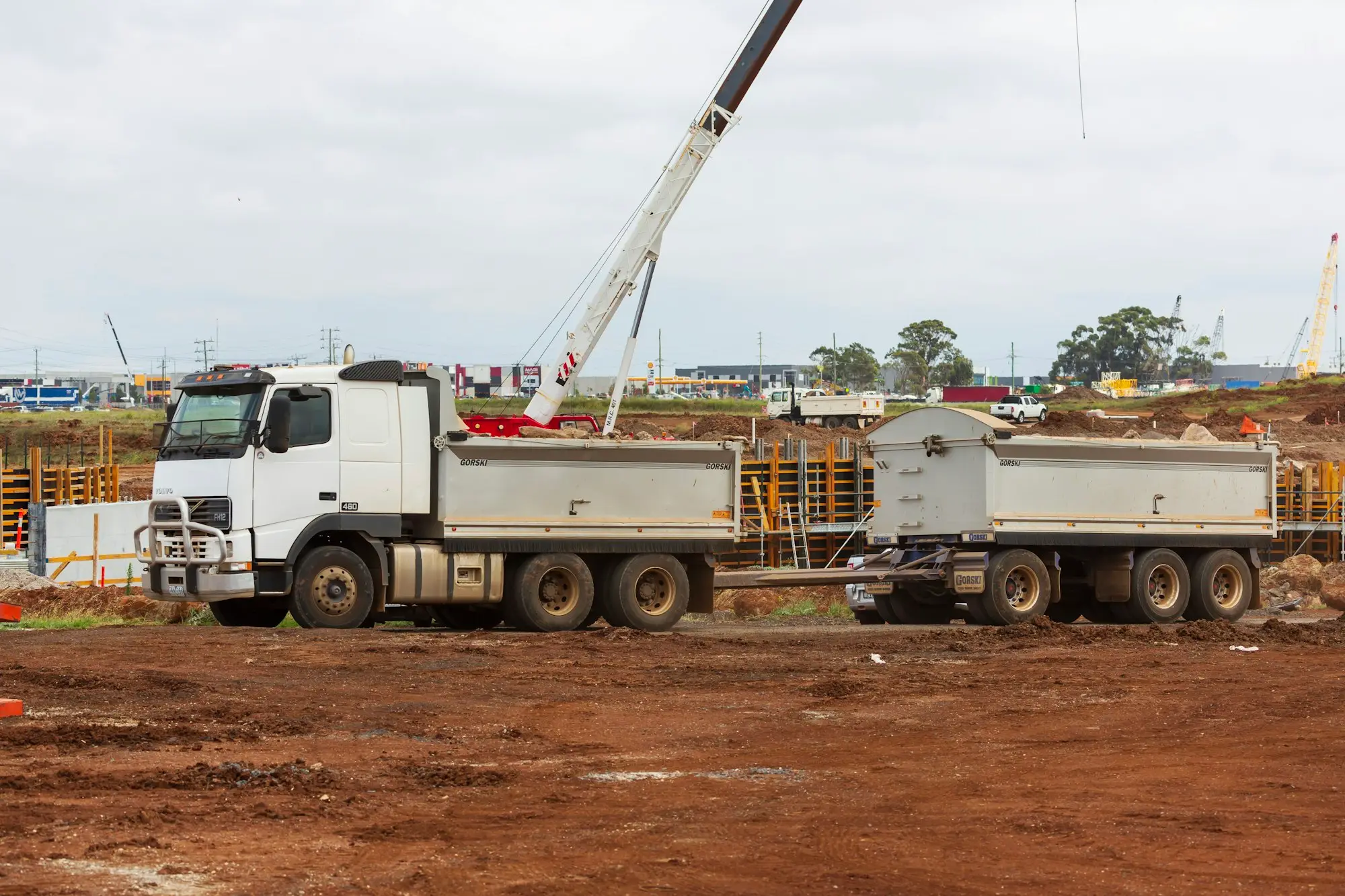
On any site, count the vehicles: crew utes, the supervisor’s car, a tipper for spoil, a tray truck for materials, a plant trailer for the excavator, a service body for the plumber. Construction businesses often have more capital tied up in vehicles than in anything except the work itself.
And construction cash flow is lumpy. Progress claims arrive on their own schedule, retentions are held, and materials need paying for up front. That’s why many builders prefer to finance vehicles rather than tie up working capital.
Common construction vehicles
| Vehicle | Typical use |
|---|---|
| Dual-cab ute | Moving crews and tools |
| Single-cab tray ute | Materials, formwork, site gear |
| Light tipper | Spoil, sand, gravel, green waste |
| Tray or tautliner truck | Bulk materials and deliveries |
| Service body truck | Trades and maintenance teams |
| Plant trailer | Excavators, skid steers, rollers |
| Supervisor’s car or SUV | Visiting sites and clients |
See light truck finance, ute finance and trailer finance.
What lenders look at for construction businesses
| Factor | What helps |
|---|---|
| Contracts | Signed contracts or a strong pipeline |
| Payment pattern | Bank statements showing progress payments arriving |
| Experience | Years in the industry and the right licences |
| Vehicle mix | Vehicles that match the work |
| Existing finance | Clean repayment history on current vehicles |
| ATO position | Up-to-date BAS; any tax debt disclosed and managed |
ATO debt can build up in construction when progress payments run late. It’s considered case by case — disclosed, managed and on a payment plan, it’s often workable. See past credit issues.
One vehicle at a time, or the whole package?
When a new contract needs a tipper, two utes and a plant trailer, you have choices:
- separate chattel mortgages, ideally on aligned terms;
- one lender for all vehicles, keeping things simple;
- a property-backed loan from $20,000 to $5,000,000 covering vehicles, equipment and working capital together.
Separate deals keep each vehicle’s finance independent. A single facility can be quicker and simpler. Property-backed funding adds flexibility but puts property on the line.
FBT and site vehicles
If your company provides utes to supervisors and leading hands who take them home, the ATO says limited private use of a ute, van or other eligible vehicle may be exempt from FBT. A supervisor’s sedan or SUV used privately is different — that’s usually a car fringe benefit. Choosing the right vehicle for each role can keep FBT simple. See FBT basics.
Heavy vehicles and registration
Tippers and trucks above certain masses need heavier licence classes, and heavy vehicles fall under national registration arrangements administered through the NHVR in participating jurisdictions. Make sure your drivers hold the right licences before you buy.
Illustrative example: a civil contractor gears up
Illustrative only. A small civil contractor wins a twelve-month subdivision contract. It needs a second light tipper, a dual-cab crew ute and a plant trailer. With the contract signed and a clean repayment record on its existing vehicles, it finances all three through one lender on aligned terms. The company keeps its cash buffer for wages and materials during the first progress claim period.
Growing your construction fleet
As the business grows, aligned terms and replacement planning make a big difference — see fleet finance. If you’re a trade subcontractor rather than a builder, tradie vehicle finance may be more relevant.
Retentions, progress claims and vehicle repayments
Construction cash flow has its own rhythm, and vehicle repayments need to fit into it. Some practical ways builders handle it:
- Match repayments to your lowest month, not your average. Progress claims can slip, and repayments don’t.
- Keep retentions out of your planning. Treat retention money as a bonus when it arrives, not as cash you can rely on for repayments.
- Stagger purchases. Adding vehicles as contracts start, rather than all at once, spreads the commitment.
- Use a modest balloon carefully. It can ease repayments while a project ramps up, as long as there’s a plan for the end.
What to prepare before a big vehicle purchase
| Document | Why lenders ask |
|---|---|
| Signed contracts or letters of award | Shows the work the vehicles will service |
| Recent business bank statements | Shows progress payments arriving |
| BAS lodgements | Confirms turnover and that lodgements are current |
| Details of existing vehicle finance | Shows total commitments and repayment history |
| Licences and insurances | Confirms the business can operate |
Subcontractors versus head contractors
Subcontractors usually need fewer, smaller vehicles — a ute, a trailer, perhaps a van — and lenders mainly look at the relationship with the builders they work for. Head contractors and civil firms tend to need a broader mix and may benefit from a single facility. Either way, the clearer the link between vehicles and contracted work, the stronger the application.
Plant versus vehicles
Excavators, skid steers and rollers are usually financed as equipment, while the trucks and utes that move them are road vehicles. The structures are similar, and lenders often handle both. If you’re buying a plant trailer to move a machine you already own, mention the machine too — it helps the lender understand the full set-up.
Ready to put more vehicles on site?
Tell us about the work and the vehicles — the enquiry takes about a minute.
There’s no credit check when you first enquire, and your details aren’t scattered across lenders. One specialist reads your enquiry and calls you to understand your contracts, cash flow and the vehicles you need. Accurate answers — including any ATO debt — mean we can find a lender who’ll say yes the first time. Start here.
Frequently asked questions
Can I finance a tipper and trailer for a new contract?
Yes. A signed contract is strong evidence for lenders. The tipper and trailer can be financed together or separately, depending on the seller and the lender.
My progress payments are lumpy. Does that hurt my application?
Not necessarily. Lenders familiar with construction understand progress claims. Clear bank statements and a sensible amount of finance relative to your income help.
Should I lease or buy construction vehicles?
Hard-working, modified vehicles like tippers and crew utes are usually better owned. Standard vehicles changed often, like supervisors' cars, may suit leases.
What if I need vehicles and machinery together?
A property-backed loan or a combination of vehicle and equipment finance can fund both. We'll explain the options once we know the mix.